# 3D Graphics Programming ## Shading Vitalijs Komasilovs --v-- ## Refactoring <div class='cols'><div> ```c++ void runOpenGLDemo() { GLFWwindow *window = ...; ... glGenVertexArrays(1, &vertexArray); ... while (!glfwWindowShouldClose(window)) { ... glDrawElements(...); } glfwDestroyWindow(window); } ``` </div><div> ```c++ class OpenGLApp { private: GLFWwindow *window; public: void run() { init(); mainLoop(); cleanup(); } } ``` </div></div> --v-- ## Mesh ```c++ class Mesh { std::vector<VertexData> vertices; std::vector<uint32_t> indices; Mesh(const char *fileName); GLuint vertexArray; GLuint vertexBuffer; GLuint indexBuffer; void upload(); void draw(); }; ``` --v-- ## Shader program ```c++ class ShaderProgram { ShaderProgram(const char *vertexFileName, const char *fragmentFileName); GLint getLocation(const char *name); void setFloat(const char *name, float value); void setMatrix(const char *name, const float *value); void setTexture(const char *name, int setId, GLuint value); }; ``` ```c++ auto loc = glGetUniformLocation(shader, name); glUniform1f(loc, value); ``` --s-- ## Camera movement <div class='cols'><div>  </div><div> ```c++ if (glfwGetKey(window, GLFW_KEY_W)) { position += speed * front; } if (glfwGetKey(window, GLFW_KEY_S)) { position -= speed * front; } if (glfwGetKey(window, GLFW_KEY_A)) { position -= speed * right; } if (glfwGetKey(window, GLFW_KEY_D)) { position += speed * right; } ``` </div></div> --v-- ## Camera rotation <div class='cols'><div> 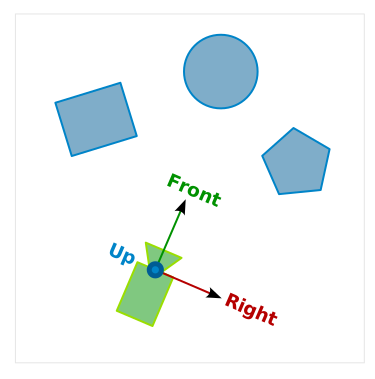 </div><div> ```c++ glfwGetCursorPos(window, &cursor.x, &cursor.y); glm::dvec2 offset = cursor - lastCursor; yaw += offset.x * sensitivity; pitch += offset.y * sensitivity; front = {cos(yaw) * cos(pitch), sin(pitch), sin(yaw) * cos(pitch)}; right = glm::cross(front, worldUp); up = glm::cross(right, front); ``` </div></div> Notes: - safety limits for pitch; - vectors should be normalized. --s-- ## Dear ImGui library > is a bloat-free graphical user interface library for C++ > outputs optimized vertex buffers to render in 3D-pipeline > fast, portable, renderer agnostic, and self-contained Notes: - Every frame the GUI is rendered in forms of triangles. - So called immediate user interface. --v-- ## GUI example ```c++ ImGui::NewFrame(); ImGui::Begin("OpenGL Demo", nullptr, ImGuiWindowFlags_NoMove); ImGui::Text("%.2f ms/frame", io.DeltaTime * 1000); ImGui::Text("%d vertices", io.MetricsRenderVertices); if (ImGui::CollapsingHeader("Camera")) { ImGui::Text("FOV: %.1f", fov); ImGui::Checkbox("Wireframe mode", wireframeMode); } ImGui::End(); ImGui::Render(); ``` --s-- ## Object colors 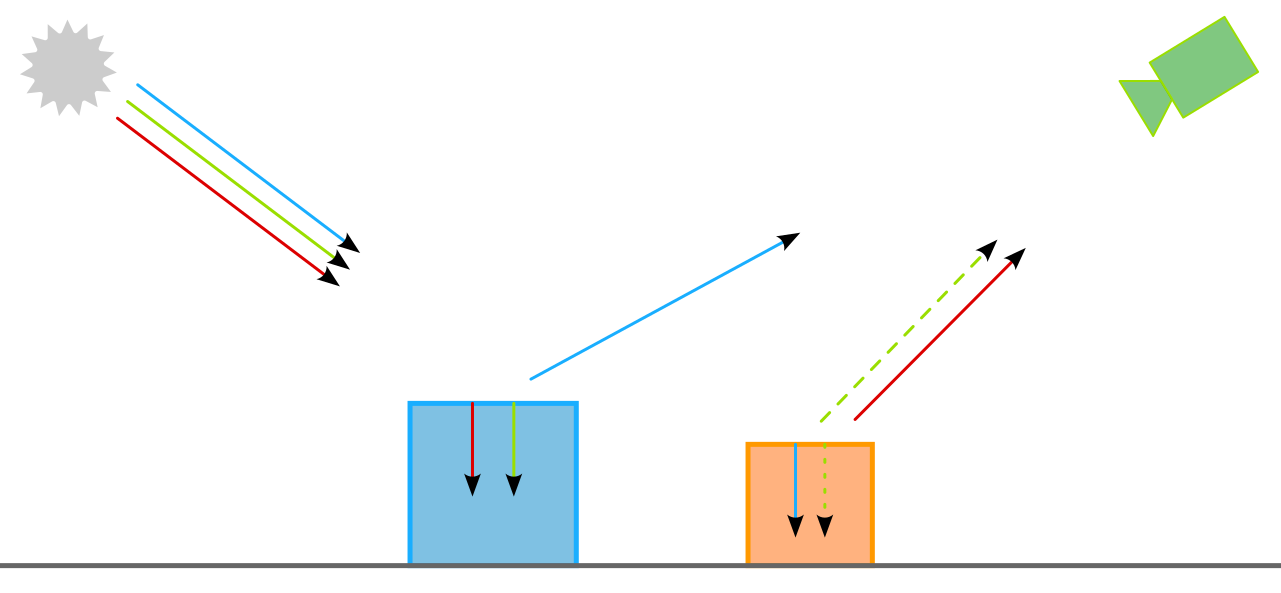 Notes: - objects *absorb* specific light wavelengths - the rest is *reflected* to the viewer - this is perceived object color --v-- ## Light colors 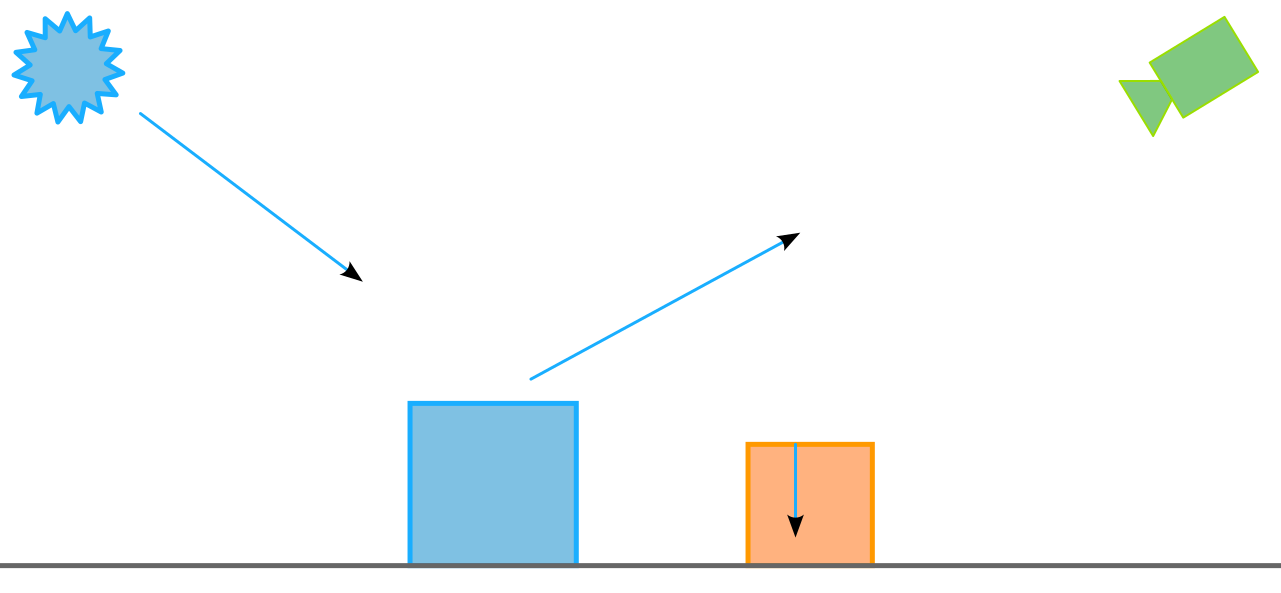 Notes: - in case of colored lights the idea stays the same - blue box in blue light is perceived as bright as light (white) - orange box absorbs all blue light, thus perceived as no light (black) --v-- ## Color math $$ \underset{visible}{\left\langle r,g,b\right\rangle} = \underset{light}{\left\langle r,g,b\right\rangle} \cdot \underset{object}{\left\langle r,g,b\right\rangle} $$  Notes: - to emulate light absorption we can use vector element-wise multiplication --s-- ## Demo scene setup for shading Various objects (cube, sphere, monkey, plane). Indication of light source position (e.g. as a sphere). Camera controls and GUI (already exists). Notes: - flat vs curved surfaces --v-- ## Multiple meshes ```c++ Mesh cube, sphere, monkey, plane; glm::mat4 cubeMatrix, sphereMatrix, monkeyMatrix, planeMatrix, lampMatrix; ``` ```c++ cube = Mesh("assets/meshes/cube.obj"); cubeMatrix = glm::mat4(1.0f); cubeMatrix = glm::translate(cubeMatrix, {-2.0f, 1.0f, -1.0f}); cubeMatrix = glm::rotate(cubeMatrix, glm::radians(35.0f), {0.0f, 1.0f, 0.0f}); ``` ```c++ shaderProgram.setMatrix("model", glm::value_ptr(cubeMatrix)); cube.draw(); shaderProgram.setMatrix("model", glm::value_ptr(sphereMatrix)); sphere.draw(); ``` Notes: - load all meshes - fill all transformation matrices - draw all objects - lamp reuses sphere mesh --v-- ## Multiple shader programs ```c++ shaderProgram = ShaderProgram( "assets/shaders/opengl-demo/shading.vert", "assets/shaders/opengl-demo/shading.frag"); lampProgram = ShaderProgram( "assets/shaders/opengl-demo/shading.vert", "assets/shaders/opengl-demo/shading_lamp.frag"); ``` ```c++ glUseProgram(shaderProgram); sphere.draw(); ... glUseProgram(lampProgram); sphere.draw(); ``` Notes: - regular objects use shading - lamp use fixed color --v-- ## Vertex shader ```glsl // shading.vert #version 450 core layout(location = 0) in vec3 inPos; layout(location = 0) uniform mat4 model; layout(location = 1) uniform mat4 view; layout(location = 2) uniform mat4 projection; void main() { gl_Position = projection * view * model * vec4(inPos, 1.0); } ``` --v-- ## Fragment shader ```glsl // shading.frag #version 450 core layout(location = 3) uniform vec3 objectColor; layout(location = 4) uniform vec3 lightColor; layout(location = 0) out vec4 fragColor; void main() { fragColor = vec4(lightColor * objectColor, 1.0); } ``` --v-- ## Lamp shader ```glsl // shading_lamp.frag #version 450 core layout(location = 4) uniform vec3 lightColor; layout(location = 0) out vec4 fragColor; void main() { fragColor = vec4(lightColor, 1.0); } ``` --v-- ## Flat colors <div class="r-stack r-stretch"> <img src="img/demo/08-shading-start.png"> <img src="img/demo/08-shading-start-wire.png" class="fragment"> </div> --s-- ## Phong shading Designed by Bui Tuong Phong in 1970s. Empirical model of surface illumination. Combines *ambient*, *diffuse* and *specular* lighting components. Notes: - empirical = based on observations, not in math --v-- ## Ambient lighting 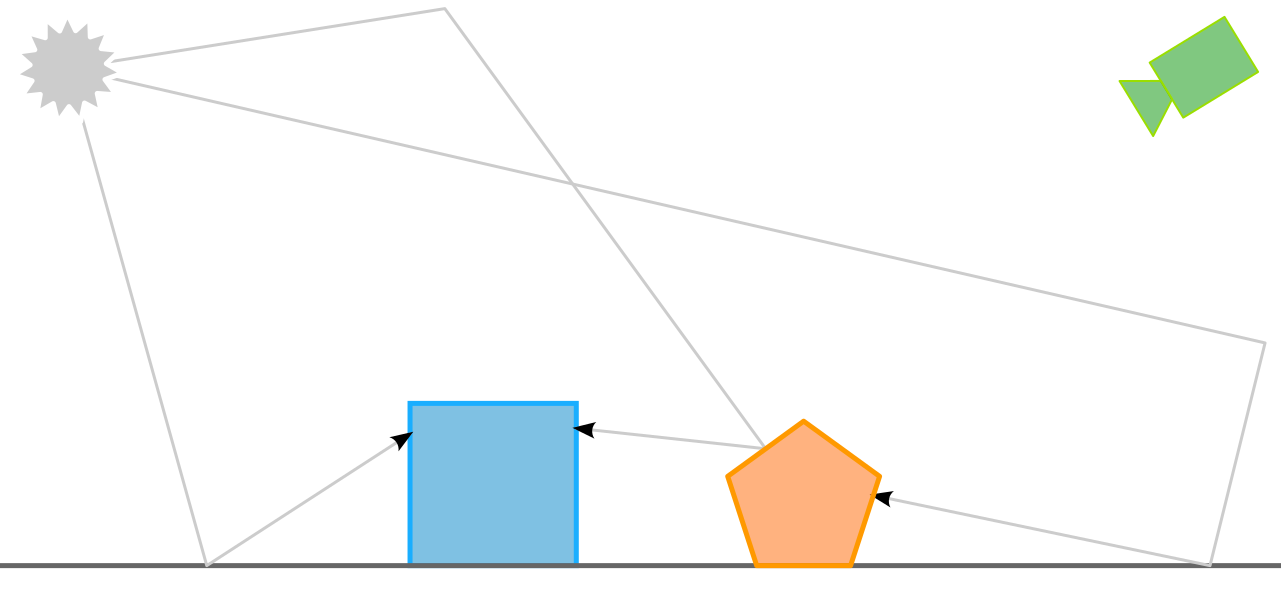 Notes: - constant light scattered between all objects - "default" light instead of pitch black darkness --v-- ## Fragment shader ```glsl #version 450 core layout(location = 3) uniform vec3 objectColor; layout(location = 4) uniform vec3 lightColor; layout(location = 0) out vec4 fragColor; void main() { vec3 ambient = 0.1 * lightColor * objectColor; vec3 diffuse = vec3(0); vec3 specular = vec3(0); fragColor = vec4(ambient + diffuse + specular, 1.0); } ``` --v-- ## Shading progress - ambient 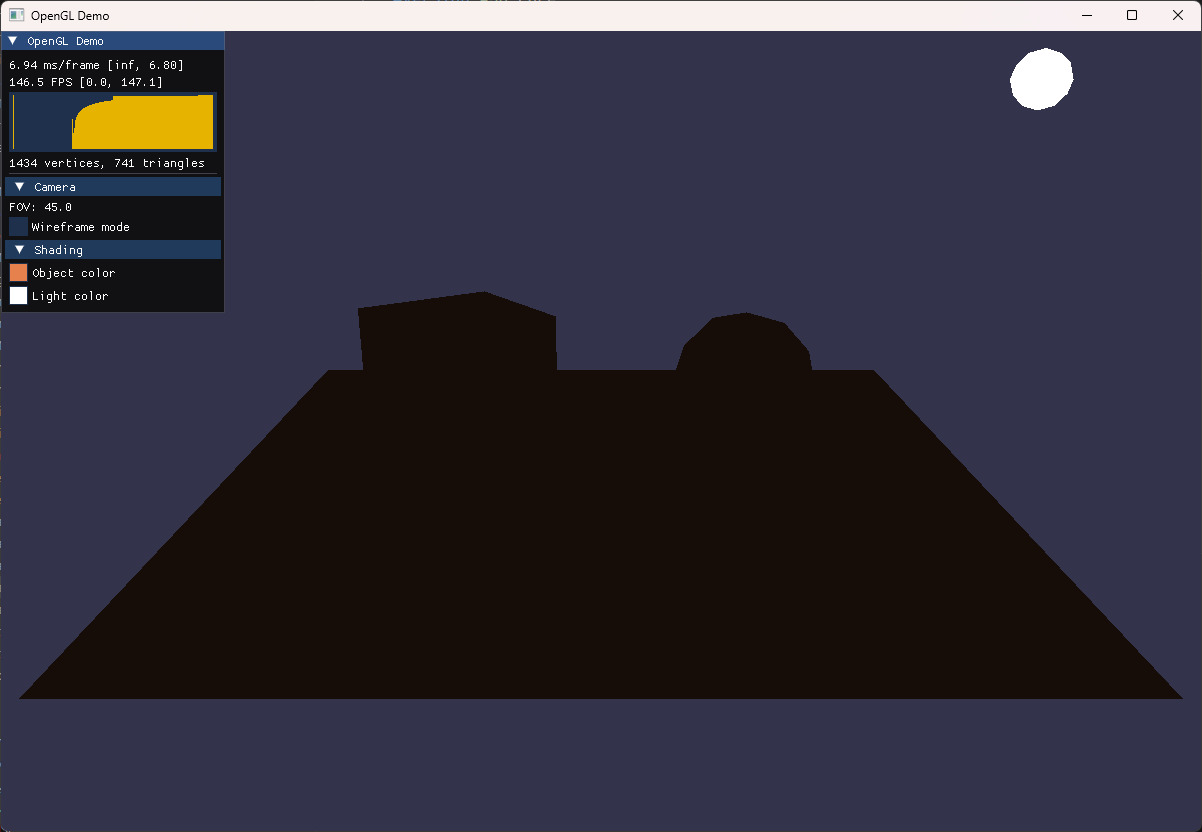 <!-- .element class="r-stretch" --> --s-- ## Diffuse lighting 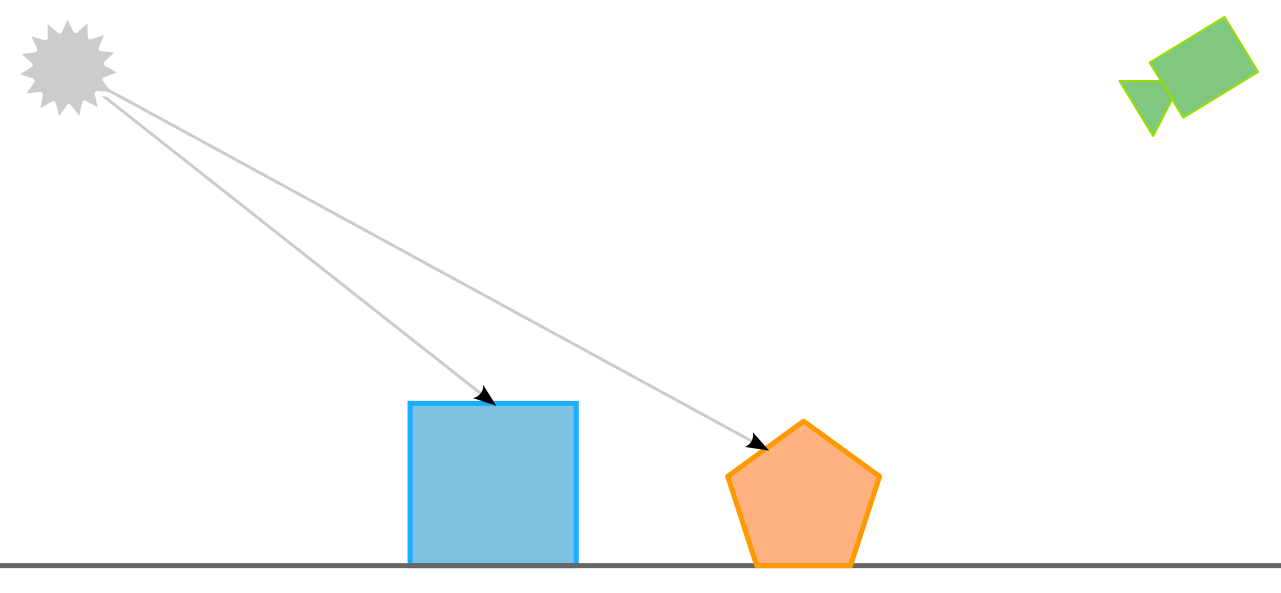 Notes: - surfaces facing towards light source are illuminated more --v-- ## Diffuse lighting 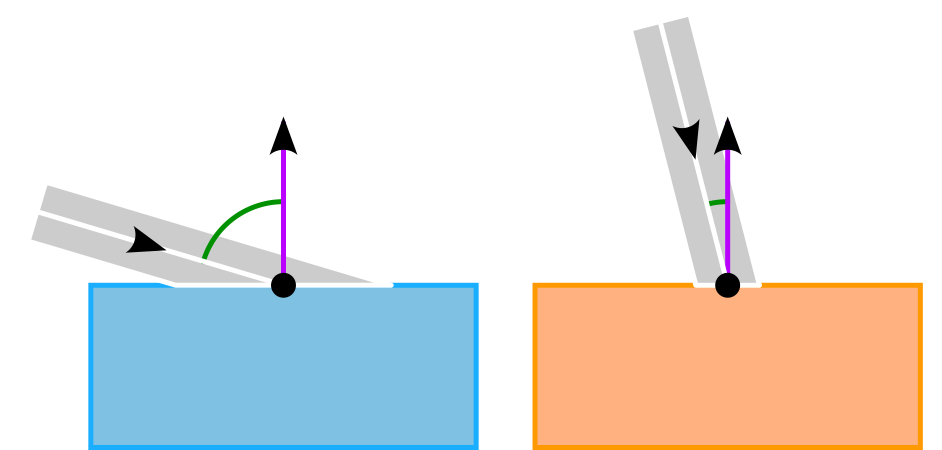 Notes: - angle between light direction and normal affects brightness of diffuse lighting; - normal vectors can be loaded from mesh; - light position can be provided via uniforms; - pixel position can be calculated from vertex positions; - world coordinates are easier to use. --v-- ## Loading normals from OBJ file <div class='cols'><div> ```diff struct VertexData { glm::vec3 pos; - glm::vec3 color; + glm::vec3 normal; glm::vec2 uv; }; ``` </div><div> ```c++ for (size_t i = 0; i < mesh->mNumVertices; i++) { ... if (mesh->mNormals) { auto n = mesh->mNormals[i]; vdata.normal = {n.x, n.y, n.z}; } ... } ``` </div></div> --v-- ## Vertex shader ```glsl #version 450 core layout(location = 0) in vec3 inPos; layout(location = 1) in vec3 inNormal; ... layout(location = 0) out vec3 pos; layout(location = 1) out vec3 normal; void main() { gl_Position = projection * view * model * vec4(inPos, 1.0); pos = vec3(model * vec4(inPos, 1.0)); normal = inNormal; } ``` Notes: - `gl_Position` is position for internal OpenGL workings (how to show on screen); - `pos` is world position for our purposes. --v-- ## Fragment shader $$a \cdot b = \left\\|a\right\\| \left\\|b\right\\| cos\alpha$$ ```glsl layout(location = 0) in vec3 pos; layout(location = 1) in vec3 normal; layout(location = 5) uniform vec3 lightPos; ... void main() { ... vec3 normDir = normalize(normal); vec3 lightDir = normalize(lightPos - pos); float diffuseAmount = max(dot(normDir, lightDir), 0.0); vec3 diffuse = diffuseAmount * lightColor * objectColor; ... } ``` Notes: - `normalize` transforms vector to unit length; - `dot` product calculates cosine of angle b/w vectors; - `diffuseAmount` is in clamped to range [0, 1]. --v-- ## Shading progress - diffuse 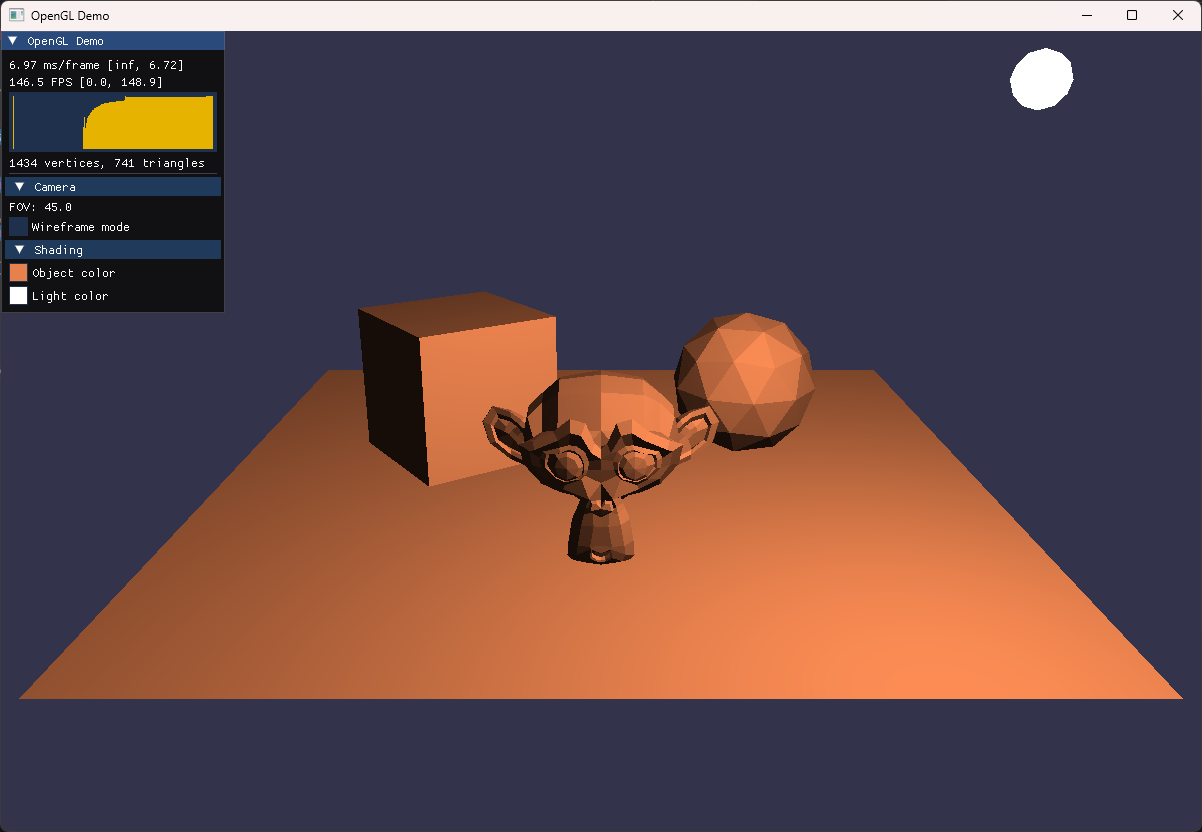 <!-- .element class="r-stretch" --> --v-- ## Non-uniform scaling problem 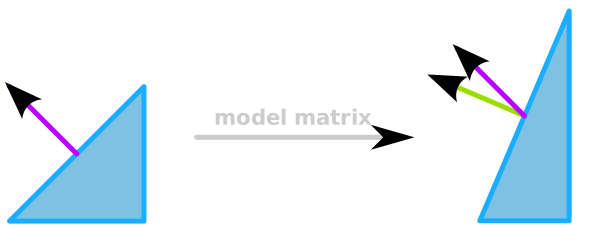 ```diff void main() { ... - normal = inNormal; + normal = mat3(transpose(inverse(model))) * inNormal; } ``` --s-- ## Specular lighting 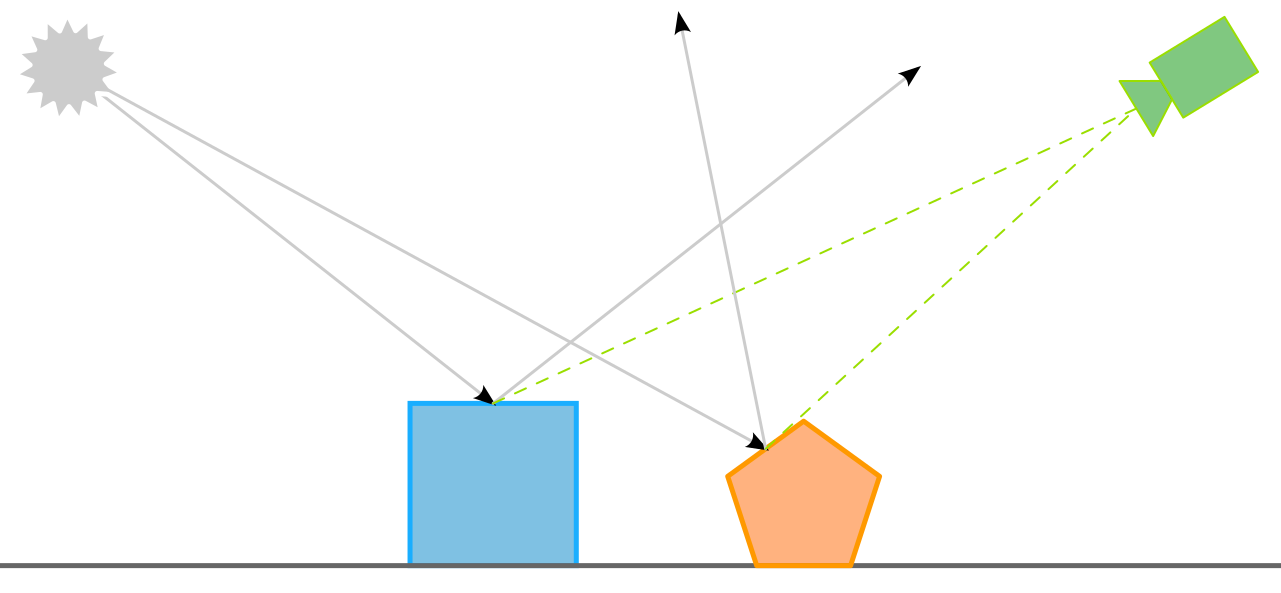 Notes: - some reflections may get into camera; - reflections aligned with view line look brighter. --v-- ## Specular lightning 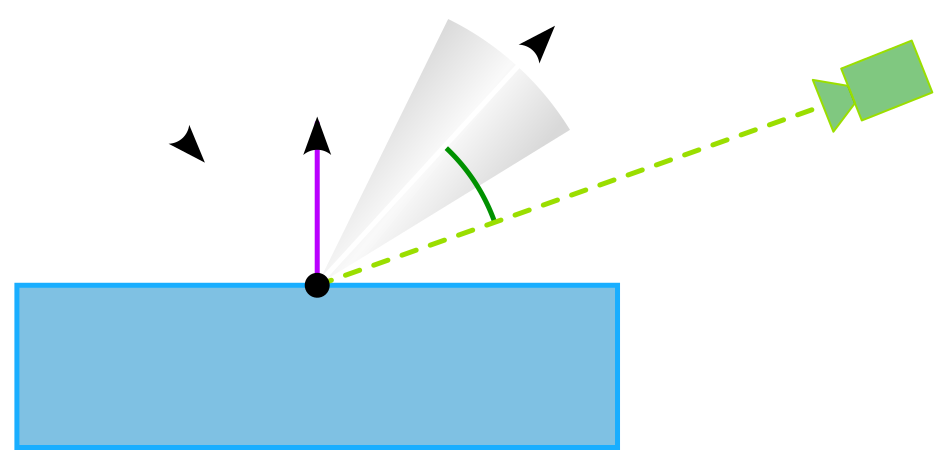 Notes: - light reflects from the surface around normal vector; - shininess defines the size of scattering cone; - angle b/w reflection and view line affects amount of visible specular lighting. --v-- ## Fragment shader ```glsl layout(location = 6) uniform vec3 cameraPos; ... void main() { ... vec3 cameraDir = normalize(cameraPos - pos); vec3 reflectDir = reflect(-lightDir, normDir); float specularAmount = max(dot(cameraDir, reflectDir), 0.0); specularAmount = pow(specularAmount, 32); vec3 specular = 0.5 * specularAmount * lightColor * objectColor; ... } ``` Notes: - `reflect` needs the vectors pointing towards the surface, thus `-lightDir`; - `shininess` easier to define via `pow` function. --v-- ## Shading progress - specular <div class="r-stack r-stretch"> <img src="img/demo/08-phong-shading-specular.png"> <img src="img/demo/08-phong-shading-diffuse.png" class="fragment"> </div> --s-- ## Smooth and flat shading 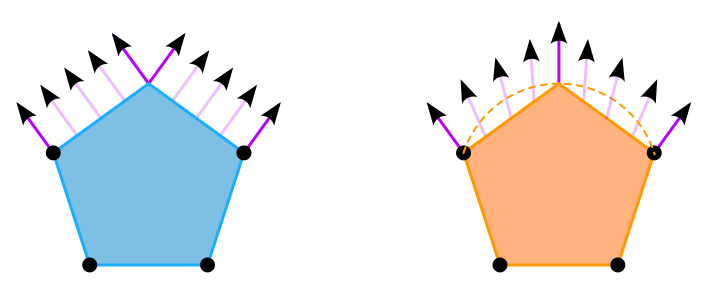 Notes: - why triangles are still visible? --v-- ## Smooth and flat shading in Blender 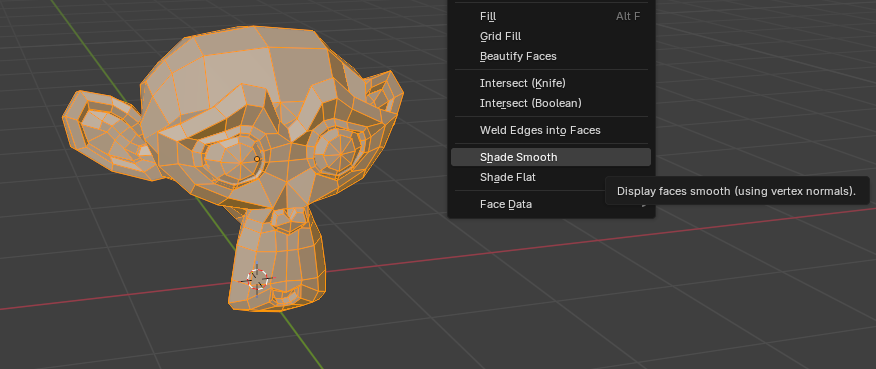 --v-- ## Phong shading completed 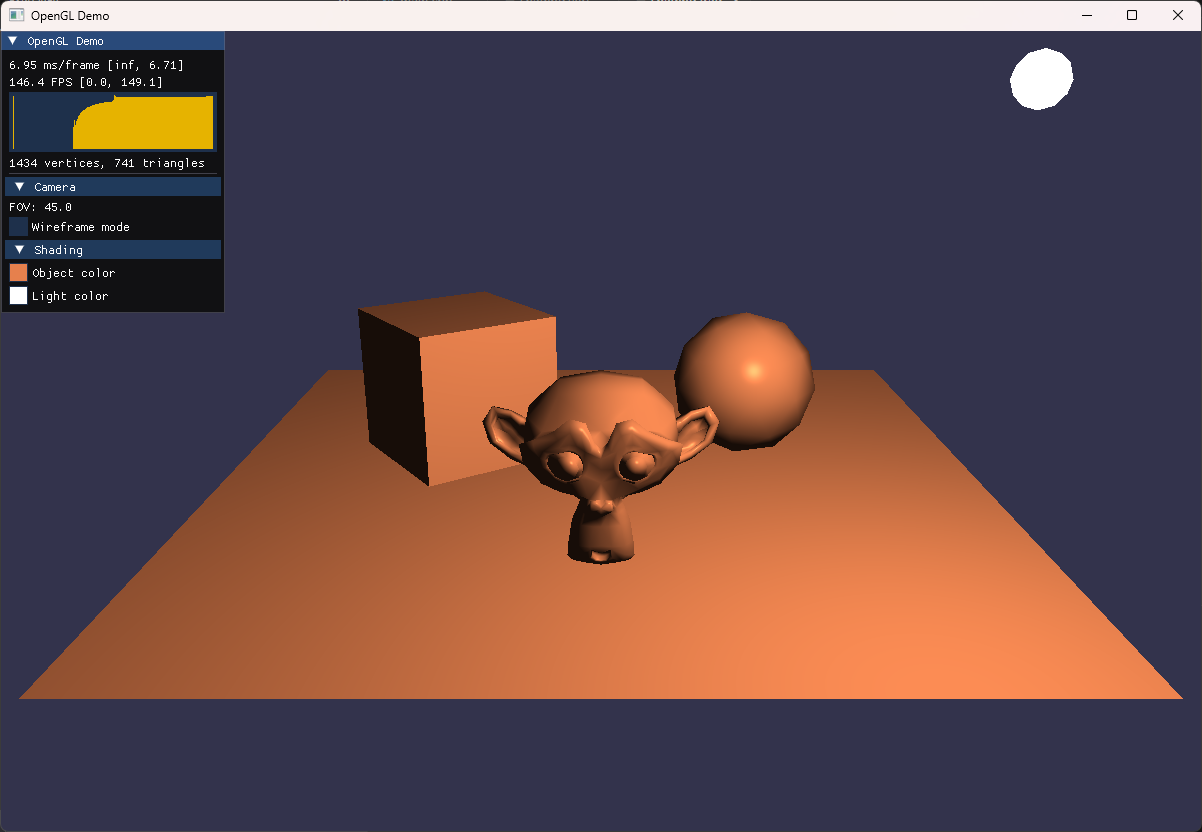 <!-- .element class="r-stretch" --> --s-- ## Hard-coded shading parameters ```glsl [2,12,13] void main() { vec3 ambient = 0.1 * lightColor * objectColor; vec3 normDir = normalize(normal); vec3 lightDir = normalize(lightPos - pos); float diffuseAmount = max(dot(normDir, lightDir), 0.0); vec3 diffuse = diffuseAmount * lightColor * objectColor; vec3 cameraDir = normalize(cameraPos - pos); vec3 reflectDir = reflect(-lightDir, normDir); float specularAmount = max(dot(cameraDir, reflectDir), 0.0); specularAmount = pow(specularAmount, 32); vec3 specular = 0.5 * specularAmount * lightColor * objectColor; fragColor = vec4(ambient + diffuse + specular, 1.0); } ``` --v-- ## Light and Material properties (as-is) | Component | Light | Material | | --------- | ------------------:| -------------:| | Ambient | `0.1 * lightColor` | `objectColor` | | Diffuse | `lightColor` | `objectColor` | | Specular | `0.5 * lightColor` | `objectColor`<br>`shininess` | Notes: - Light source properties - Object material properties --v-- ## Light and Material properties (to-be) | Component | Light | Material | | --------- | ----------:| ---------:| | Ambient | `ambient` | `diffuse` | | Diffuse | `diffuse` | `diffuse` | | Specular | `specular` | `specular`<br>`shininess` | Notes: - we can include coefficients into colors themselves; - define separate colors for each component; - usually materials share ambient and diffuse colors, while specular is separate (e.g. clear coat effects) --v-- ## Organizing shading properties <div class='cols'><div> ```c++ struct Material { glm::vec3 diffuse; glm::vec3 specular; float shininess; }; struct Light { glm::vec3 pos; glm::vec3 ambient; glm::vec3 diffuse; glm::vec3 specular; }; ``` </div><div> ```c++ Material material = { .diffuse = {0.9f, 0.5f, 0.3f}, .specular = {1.0f, 1.0f, 1.0f}, .shininess = 32 }; Light light = { .pos = {3.0f, 5.0f, 5.0f}, .ambient = {0.1f, 0.1f, 0.1f}, .diffuse = {1.0f, 1.0f, 1.0f}, .specular = {0.5f, 0.5f, 0.5f} }; ``` </div></div> --v-- ## Structs to uniforms ```c++ shaderProgram.setVec3("material.diffuse", glm::value_ptr(material.diffuse)); shaderProgram.setVec3("material.specular", glm::value_ptr(material.specular)); shaderProgram.setFloat("material.shininess", material.shininess); shaderProgram.setVec3("light.pos", glm::value_ptr(light.pos)); shaderProgram.setVec3("light.ambient", glm::value_ptr(light.ambient)); shaderProgram.setVec3("light.diffuse", glm::value_ptr(light.diffuse)); shaderProgram.setVec3("light.specular", glm::value_ptr(light.specular)); ``` --v-- ## Fragment shader ```glsl layout(location = 3) uniform Material material; layout(location = 6) uniform Light light; void main() { vec3 ambient = light.ambient * material.diffuse; ... vec3 diffuse = diffuseAmount * light.diffuse * material.diffuse; ... vec3 specular = specularAmount * light.specular * material.specular; ... } ``` --v-- ## Material example 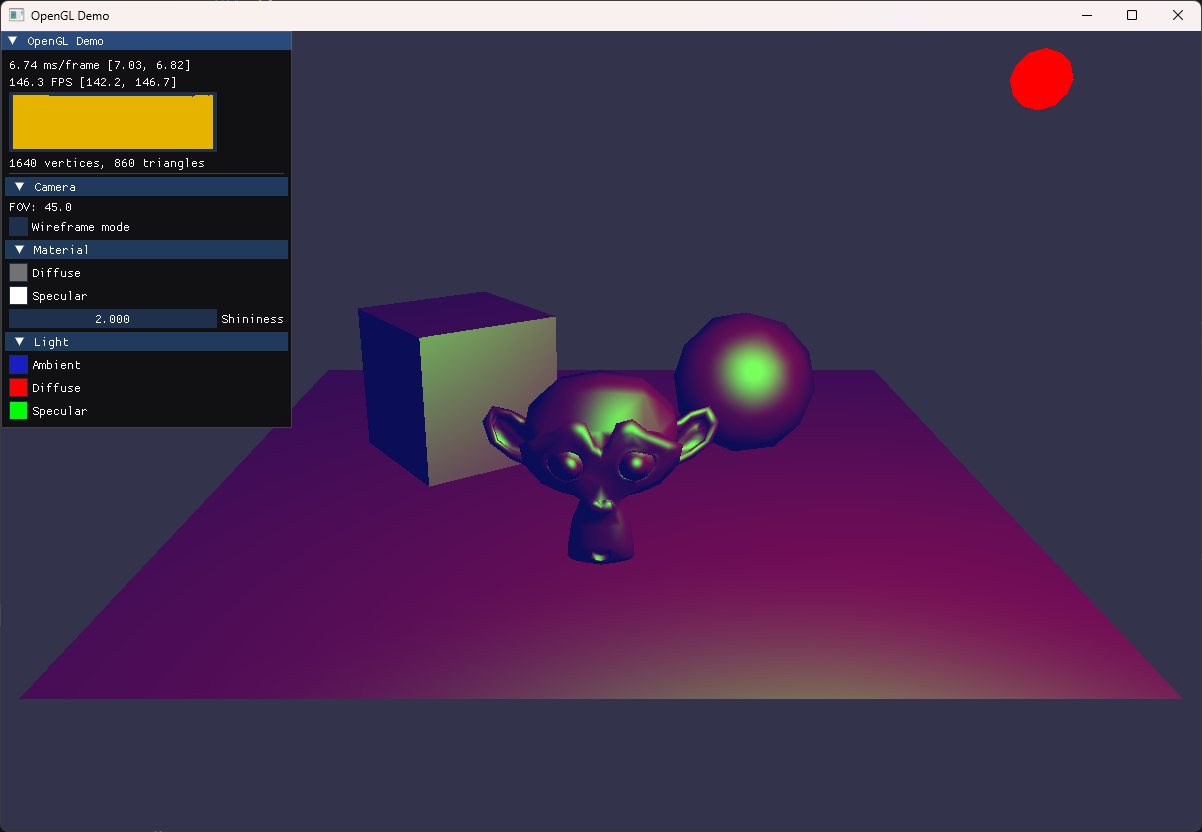 <!-- .element class="r-stretch" --> --s-- ## Multiple materials ```c++ Material cubeMaterial, sphereMaterial, monkeyMaterial, planeMaterial; ``` ```c++ cube = Mesh("assets/meshes/cube.obj"); ... cubeMaterial = {.diffuse = {0.66f, 0.27f, 0.14f}, .specular = {0.7f, 0.7f, 0.7f}, .shininess = 6}; ``` ```c++ shaderProgram.setMatrix("model", glm::value_ptr(cubeMatrix)); cubeMaterial.use(shaderProgram); cube.draw(); shaderProgram.setMatrix("model", glm::value_ptr(sphereMatrix)); sphereMaterial.use(shaderProgram); sphere.draw(); ``` --v-- ## Multiple materials example 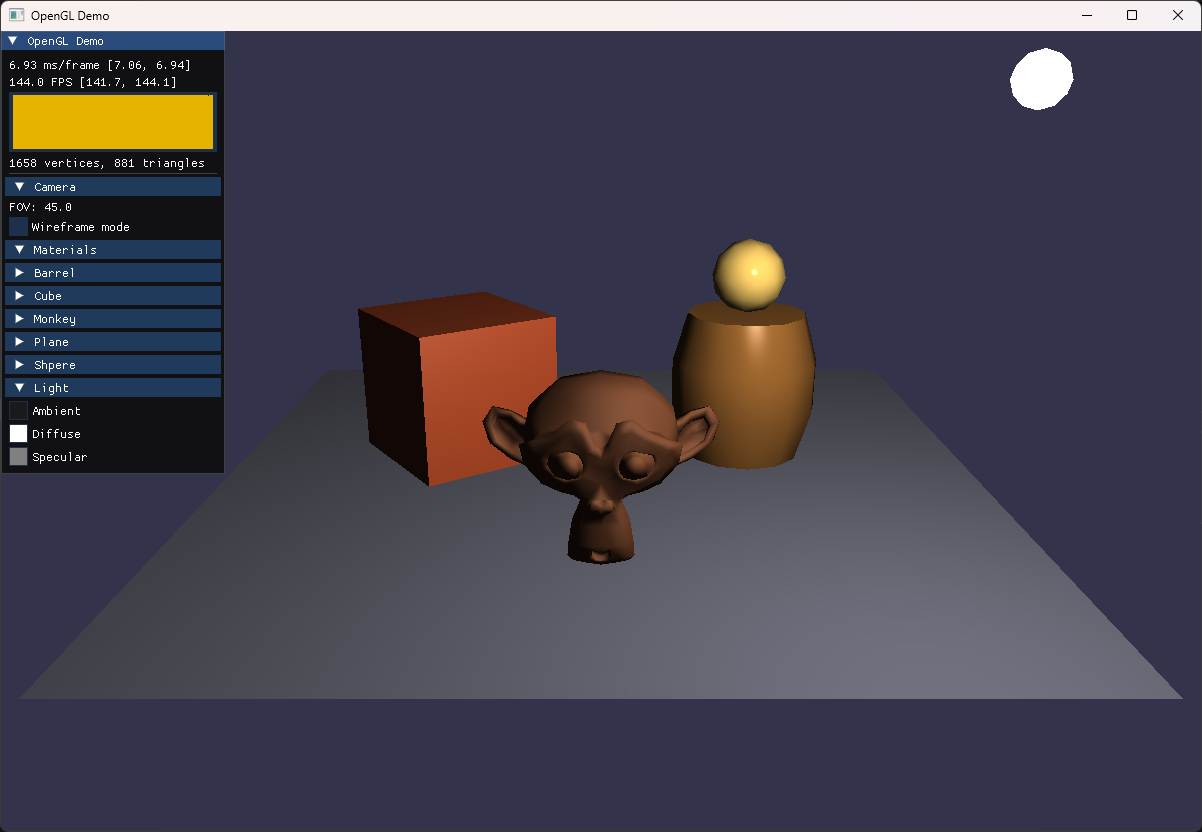 <!-- .element class="r-stretch" --> Notes: - each object has its own material; - but only single color per object. --s-- ## Shading maps <div class='cols'><div> ```diff struct Material { - glm::vec3 diffuse; + Texture diffuse; glm::vec3 specular; float shininess; }; ``` </div><div> ```diff cubeMaterial = { - .diffuse = {0.66f, 0.27f, 0.14f}, + .diffuse = Texture("box_diffuse.png"), .specular = {0.7f, 0.7f, 0.7f}, .shininess = 6 }; ``` </div></div> --v-- ## Vertex shader ```glsl ... layout(location = 2) in vec2 inUV; ... layout(location = 2) out vec2 uv; void main() { ... uv = inUV; } ``` --v-- ## Fragment shader ```glsl ... layout(location = 2) in vec2 uv; void main(){ vec3 ambient = light.ambient * texture(material.diffuse, uv).rgb; ... vec3 diffuse = diffuseAmount * light.diffuse * texture(material.diffuse, uv).rgb; ... } ``` --v-- ## Diffuse maps added 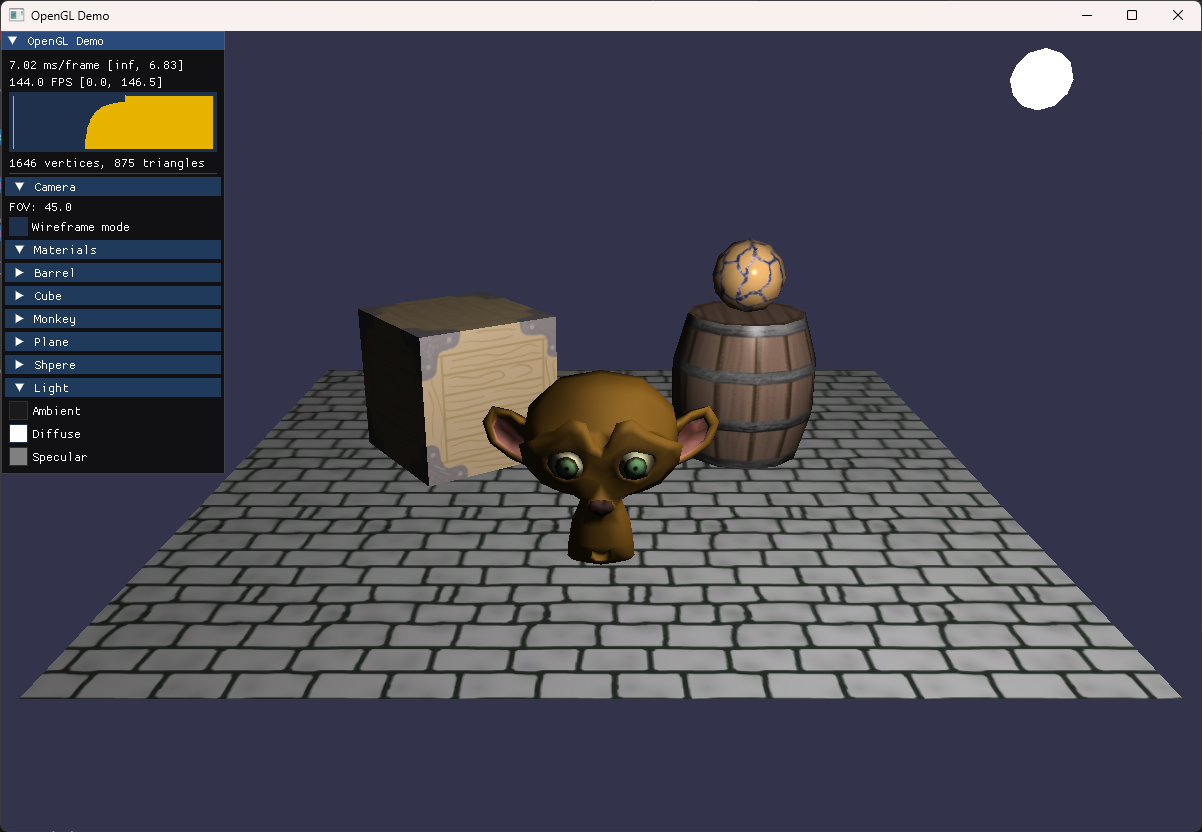 <!-- .element class="r-stretch" --> --v-- ## More shading maps <div class='cols'><div> ```diff struct Material { Texture diffuse; - glm::vec3 specular; + Texture specular; float shininess; }; ``` </div><div> ```diff cubeMaterial = { .diffuse = Texture("box_diffuse.png"), - .specular = {0.7f, 0.7f, 0.7f}, + .specular = Texture("box_specular.png"), .shininess = 6 }; ``` </div></div> --v-- ## Diffuse and specular maps added 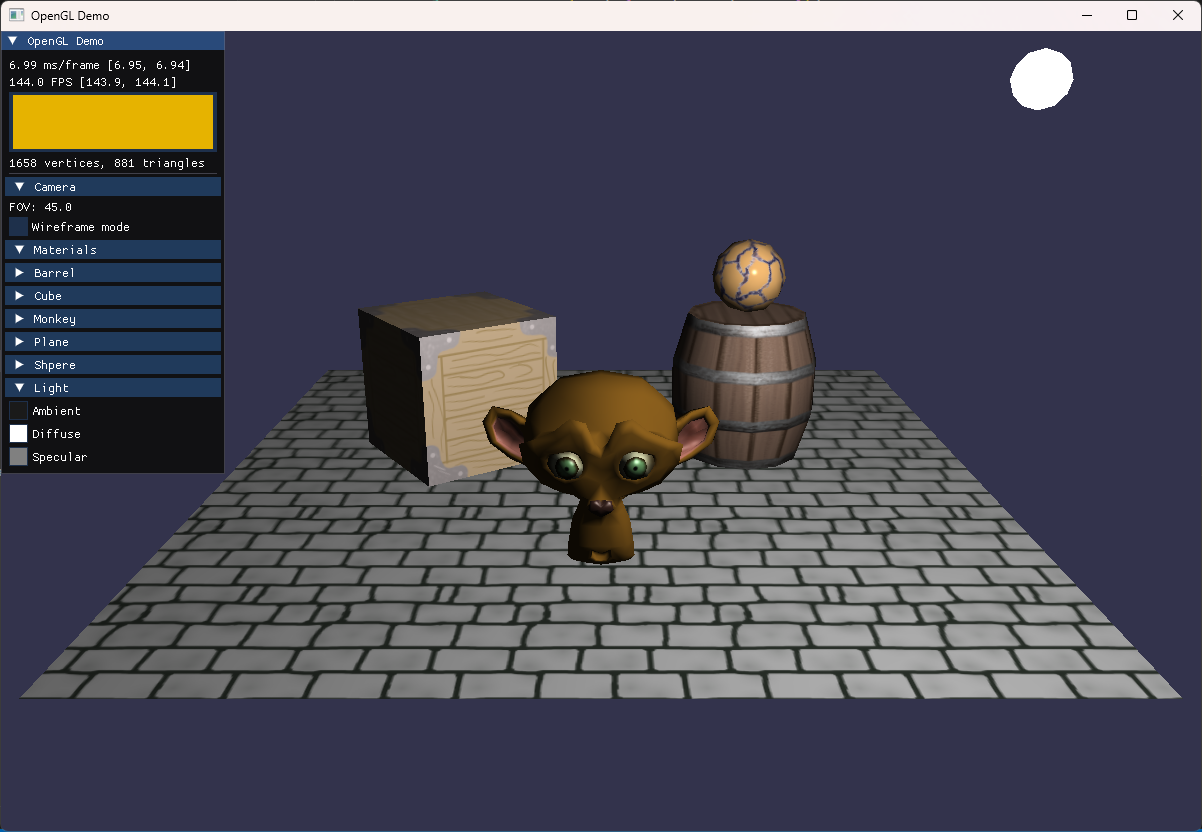 <!-- .element class="r-stretch" -->